
Centrifuge or Juicer: The Best Choice For You
juin 30, 2025
If you're thinking of buying a juicer, you've probably asked yourself this question: should I choose a centrifugal juicer or a slow juicer? I've been there. And in Canada, where fresh fruits and vegetables can be expensive and kitchen space is at a premium, it's not a decision to be taken lightly.
In this guide, I'll explain the essentials to avoid wasting money on an appliance that doesn't suit your lifestyle. Let's get started.
Centrifugal juicer vs. slow juicer: understanding the two types
Before we talk about what's "better" and why, let's look at how these two types of machines work:
How a centrifugal juicer works
A centrifugal juicer is what most people imagine when they think of a classic juicing appliance.
These machines grate fruits and vegetables with blades spinning at high speeds, up to 14,000 revolutions per minute. The pulp is thrown against a fine metal filter, separating the juice in seconds. This rapid process makes it a popular choice for quick, hassle-free juices.
But this speed comes at a price: it generates more heat and oxidation, which can alter the quality of the juice and reduce its shelf life. It's more about rotation than pressing.
How a masticating (or cold press) juicer works
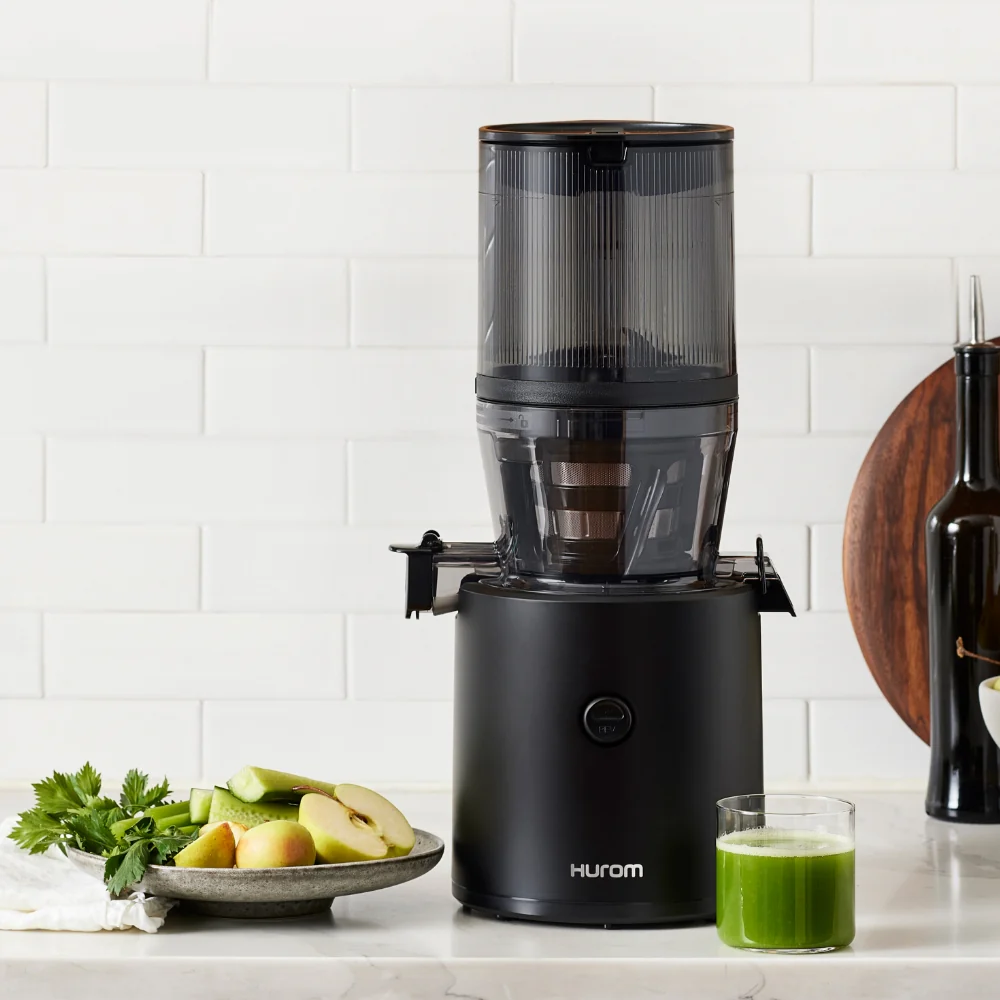
Slow juicers are also called masticating juicers or cold press juicers. Their method is completely different. Instead of slicing with fast blades, they use an auger that slowly crushes fruits and vegetables to extract the juice.
This gentle pressing allows for efficient extraction while retaining more nutrients and reducing oxidation.
They are quieter, produce less foam, and the juice lasts longer. Although it takes a little longer, the quality and yield are generally higher.
Centrifugal juicer vs. slow juicer: the major differences
Now that you know how each machine works, let's look at what sets them apart in daily use:
1. Nutritional quality of the juice
Juice isn't just about taste. Most of us consume it for its nutrients, especially when it comes to green juices or homemade vegetable juices.
And that's where centrifugal juicers show their limitations. Due to the heat and oxidation generated by the high speed, some essential nutrients are lost. Heat-sensitive vitamins, such as vitamin C, as well as enzymes and antioxidants, degrade more quickly under these conditions.
Result: a drink that looks fresh, but has low nutritional value.
Conversely, cold press juicers avoid this problem. Thanks to slow pressure extraction, they produce neither heat nor significant air exposure. Nutrients therefore remain better preserved. The resulting juice has a smoother texture, a clearer taste, and lasts longer without separating or changing color.
And research confirms this: a study published in Food Science and Engineering showed that cold press juicers produced a significantly higher juice yield than centrifugal juicers. They also offered better juice quality, particularly in terms of color and consistency, while retaining comparable antioxidant levels.
This is why slow juicers are often the best choice for those looking for nutritious, high-quality juice.
2. Yield and efficiency
One of the most striking performance differences between the two types of appliances is seen in the pulp.
If you've ever observed the pulp from a centrifugal juicer, you've probably noticed that it's wet. This means that a large amount of juice remains trapped in the waste. In the long run, this adds up, especially if you juice every day or use organic produce, which is more expensive in Canada.
Slow juicers extract more liquid by pressing slowly and thoroughly. The result is significantly drier pulp and a better juice yield.
The difference is particularly noticeable with fibrous ingredients like kale, celery, and beets. Even softer fruits like apples and citrus produce better results.
In terms of yield, slow juicers clearly perform better. This means more juice for the same amount of ingredients, fewer grocery trips, and less pulp to throw in the compost.
P.S.: This pulp doesn't have to end up in the trash. You can reuse it in soups, smoothies, muffins, omelets, or even in homemade frozen dog treats or natural face masks. A great way to maximize your ingredients.
3. Ease of cleaning and maintenance
One of the main reasons people stop using their juicer? Cleaning takes too long.
Centrifugal juicers often have sharp blades, metal filters, and pulp containers, all of which require thorough scrubbing. Some parts are dishwasher safe, but you'll still need to rinse and clean manually, especially after fibrous ingredients.
Older slow juicers had the same drawbacks, but recent models have made a lot of progress. Brands like Hurom have launched Easy Clean models without traditional metal filters. Instead, they use smooth surfaces and screenless technology that allows parts to be rinsed under water in seconds.
If you want to juice regularly without spending too much time at the sink, an easy-to-clean slow juicer makes the habit much easier to adopt.
4. Noise and home environment
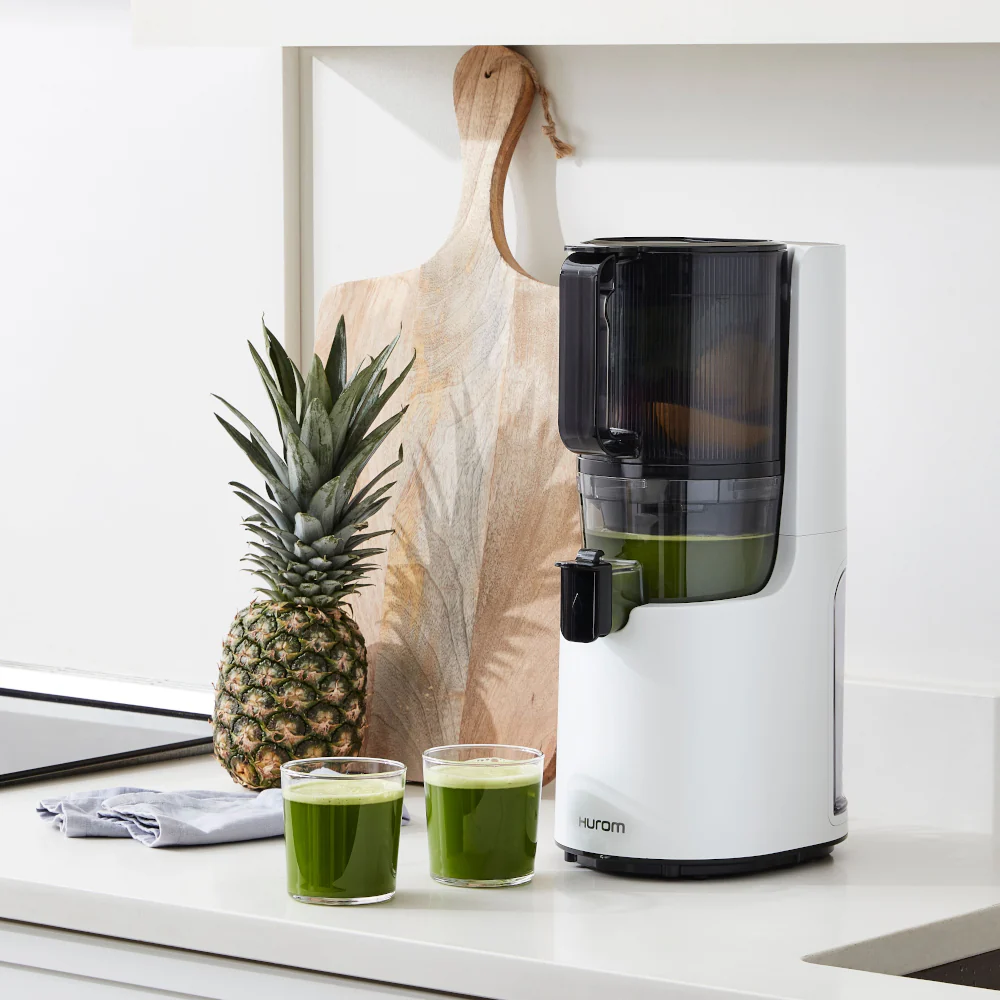
Some centrifugal juicers are powerful, but also noisy. The high-speed spinning blades and motors generate noise comparable to that of a blender or vacuum cleaner. In Canadian homes, where open kitchens and shared spaces are common, this can become an annoyance.
Juicing early in the morning? Not ideal with a centrifugal juicer, especially if you live in an apartment or have sleeping loved ones nearby.
Slow juicers, on the other hand, are much quieter. They emit a gentle hum rather than a racket. Perfect for apartments, families with children or pets sensitive to sudden noises.
If you like quiet in the kitchen, the sound difference alone can justify choosing a slow juicer.
5. Durability and warranty
Many centrifugal juicers give the impression of being temporary solutions. They are cheaper to buy, but often wear out in a year or two, especially with regular use. Warranties are limited, and it can be difficult to find parts or after-sales service.
Slow juicers, especially those designed by brands specializing in cold press technology, are built to last. Hurom, for example, offers a 10 to 15-year warranty on its motors, demonstrating their confidence in the durability of their products. A real plus if you don't want to replace your appliance every two years.
In terms of longevity, quality juicers hold up very well to daily use. Even if the initial cost is higher, you won't have to repay when a blade wears out or a motor breaks down. It's simply a more reliable investment.
Slow juicer or centrifugal juicer: which is the best choice for you?
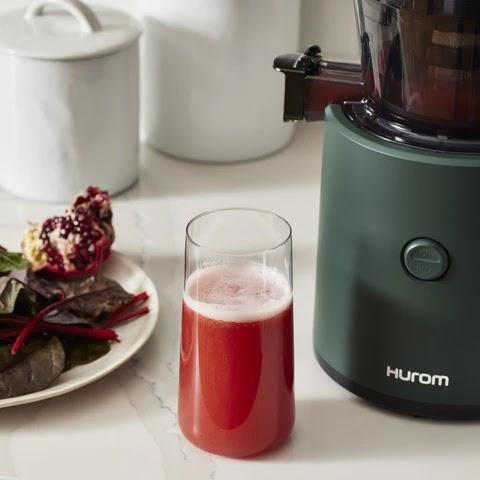
A slow juicer is generally the best choice if you're looking for higher yield, better nutritional value, and juice that lasts longer.
Centrifugal juicers are faster and cheaper, but slow juicers offer better value for health-conscious individuals.
Still not sure which one is right for your routine? Here are some tips to help you:
When a centrifugal juicer might be right for you
If you're new to juicing or plan to use it occasionally, a centrifugal juicer might be enough for now. Here are cases where it can be a good choice:
-
You juice occasionally and don't want to spend too much.
-
Getting your juice quickly is more important than extracting every nutrient.
-
You accept that the juice separates quickly or has a bit of foam on top.
-
You're okay with replacing the appliance after a few years.
It's an option that gets the job done quickly. Just expect more cleaning, wetter pulp, and a shorter shelf life. And if you want to regularly juice leafy greens or fibrous ingredients, you might be disappointed with the performance.
Why a slow juicer is worth it for most people
If you're serious about juicing and want to make it a habit, a slow juicer is often a better long-term investment. It offers superior yield, better nutrient preservation, and makes the experience more enjoyable in the kitchen.
Here's when a slow juicer is for you:
-
You want to get the most out of every fruit or vegetable.
-
It's important for you to preserve vitamins, enzymes, and antioxidants.
-
Quiet mornings matter, especially if you live with others.
-
You follow a healthy diet, meal prep, or avoid added sugars.
-
You prefer a reliable appliance that lasts and doesn't require frequent replacement.
If this sounds like you, the initial investment in a masticating juicer quickly pays off. Especially with easy-to-clean models, which give you more control over texture and pulp. This is where brands like Hurom make a difference: quiet, efficient, and pleasant to use.
What Canadians should consider before buying a juicer
Once you've narrowed down your options, the next step is to choose a machine that fits your lifestyle in a Canadian household.
Long winters, limited kitchen space, and the high cost of fresh produce mean your choices need to be practical. Whether you're leaning towards a slow juicer or a faster centrifugal model, here are the key factors to keep in mind:
Availability in Canada for repairs or exchanges
Always check if the brand offers customer service in Canada. In case of a problem, you probably don't want to deal with international returns or vague policies.
Having access to local service, spare parts, or a responsive team makes all the difference, especially for an appliance used regularly.
So choose brands like Hurom, which offer good after-sales service and spare parts in Canada. They stand by their warranty commitments, making it a safer long-term purchase.
Energy consumption and seasonal costs
In Canada, cold months often mean indoor activities, including juicing. Most slow juicers consume less than 200 watts, making them energy efficient even with daily use.
That said, even small appliances can impact your monthly bill in provinces where electricity is expensive. Look for low-consumption models with efficient motors and continuous operation support, for regular use without skyrocketing costs.
Seasonal costs aren't just about energy. In winter, fresh fruits and vegetables are often more expensive and less accessible. A high-yield juicer helps you get the most out of every ingredient, reduce waste, and lighten your grocery budget.
Kitchen size and storage practicality
In urban condos or shared housing, counter space is limited. A compact, quiet, and lightweight appliance that you can keep within reach is more likely to integrate into your daily routine.
Choose compact vertical models like the Hurom H310, which are easy to place on the counter without cluttering it. They are also quiet, which is practical if you live with other people or appreciate tranquility in the morning.
N’oubliez pas de bien vérifier les dimensions avant de commander en ligne.
Pourquoi Hurom est le meilleur choix d’extracteur lent au Canada
Une fois que vous avez décidé qu’un extracteur lent est ce qu’il vous faut, l’étape suivante est de choisir un modèle qui tient vraiment ses promesses.
Parmi les nombreuses options disponibles, Hurom se distingue non pas par ses fonctionnalités tape-à-l'œil, mais par sa constance, sa fiabilité et ses choix de conception qui facilitent la préparation de jus au quotidien. Ce sont des qualités essentielles lorsque l'espace est restreint, les matins calmes et le nettoyage rapide.
Voici ce qui fait de Hurom un choix judicieux pour les ménages canadiens :
Conçu pour la qualité, fabriqué pour durer
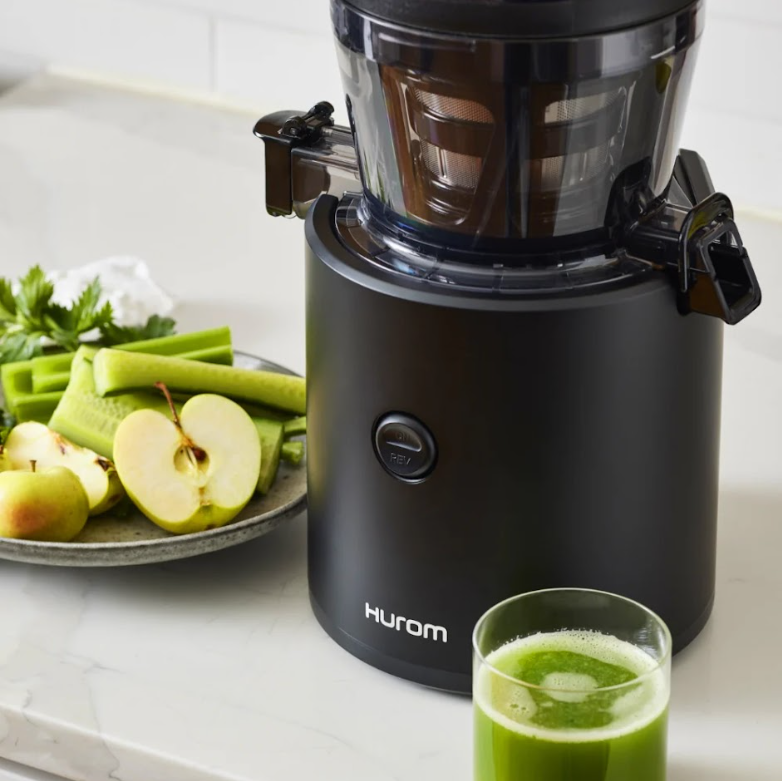
Les extracteurs Hurom sont pensés pour durer. Le moteur est puissant, les pièces solides, et rien ne s’use au bout de quelques semaines.
On sent tout de suite la différence à l’usage : tout s’emboîte bien, tout fonctionne de manière fluide. C’est sans doute pour ça que la marque propose une garantie de 10 à 15 ans sur ses moteurs.
Les matériaux sont également sans BPA et sûrs pour l’alimentation. C’est rassurant, surtout si vous faites des jus tous les jours pour vous ou votre famille.
Silencieux, compacts et faciles à nettoyer
Ce que je préfère chez Hurom, c’est qu’ils ont vraiment simplifié le nettoyage. Leurs modèles Easy Clean, comme les H70 et H400, ont remplacé les anciens filtres métalliques qui prenaient une éternité à frotter. Là, un simple rinçage sous l’eau suffit — pas besoin de brosses ni de tracas.
Ils ont aussi bien pensé à l’encombrement. Si votre cuisine est petite, un appareil imposant n’est pas l’idéal. Le H310 est étonnamment compact tout en offrant d’excellentes performances. Et côté bruit ? Un simple bourdonnement. Je peux faire mes jus le matin sans réveiller personne, et ça change tout.
Un seul appareil, plusieurs usages
Autre point fort : les extracteurs Hurom ne se limitent pas aux jus de fruits ou légumes.
J’ai utilisé le mien pour faire du jus d’herbe de blé, de betterave… et il s’en sort très bien. Mais ce n’est pas tout.
J’ai aussi préparé du lait d’amande, du beurre de noix, et même des sorbets maison pendant l’été. Quand le froid arrive, je passe à des mélanges plus épais comme le jus pomme-gingembre ou des bases végétales pour les soupes chaudes.
Si vous cherchez à adopter une routine saine autour des jus et des ingrédients bruts, Hurom vous offre de la flexibilité sans encombrer votre cuisine.
Facilitez vos jus quotidiens avec Hurom !
À la comparaison, les presse-agrumes à froid surpassent constamment les centrifugeuses en termes de qualité, d’efficacité et de durabilité.
Les presse-agrumes à froid soutiennent les routines quotidiennes en produisant un jus plus lisse, qui se conserve mieux et génère moins de bruit et de nettoyage.
Les centrifugeuses, bien qu’elles soient plus rapides, perdent souvent en nutriments, en durée de conservation et en régularité de résultat.
Des marques comme Hurom proposent des extracteurs lents bien conçus, faciles à nettoyer, et pensés pour un mode de vie axé sur la santé. Pour la majorité des utilisateurs, c’est un investissement bien plus judicieux sur le long terme.
Hurom Product Catalog Overview
FAQs
Quel est le meilleur choix : centrifugeuse ou extracteur à mastication ?
Les extracteurs à mastication sont préférables si vous cherchez la qualité, la nutrition et la régularité. Ils extraient plus de jus, conservent mieux les nutriments, et le jus se sépare moins vite. Les centrifugeuses sont plus rapides, mais leur jus se conserve moins longtemps et est moins homogène.
Quels sont les inconvénients d’une centrifugeuse ?
Elles sont bruyantes, moins efficaces, et leur jus se sépare rapidement. Elles gèrent mal les légumes-feuilles ou les ingrédients fibreux. Et à long terme, vous gaspillez plus d’ingrédients en raison du faible rendement.
Les centrifugeuses détruisent-elles les nutriments ?
Elles ne détruisent pas tout, mais provoquent une perte partielle. La vitesse élevée génère de la chaleur et fait entrer de l’air, ce qui augmente l’oxydation. Cela réduit les vitamines sensibles à la chaleur comme la vitamine C, et affecte la qualité du jus.
Pourquoi les jus faits avec une centrifugeuse s’oxydent-ils plus vite ?
À cause des lames tournant à grande vitesse, qui incorporent de l’air pendant l’extraction. Cet air accélère l’oxydation, altérant le goût, la couleur et la stabilité nutritionnelle. Cela réduit aussi la durée de conservation.
Le jus pressé à froid est-il meilleur que celui d’une centrifugeuse ?
Oui. Le jus pressé à froid conserve plus de nutriments, a une texture plus agréable et se sépare moins rapidement. Des études ont montré qu’il offre un meilleur rendement et une qualité de jus supérieure. Cela se sent au goût comme à l’œil.
Quel type d’extracteur est le plus adapté aux légumes-feuilles et ingrédients fibreux ?
Les extracteurs à mastication sont les plus adaptés. Ils sont conçus pour traiter des ingrédients comme le chou kale, le céleri ou le gingembre. Les centrifugeuses, elles, ont du mal avec ces aliments et laissent beaucoup de jus dans la pulpe.